Malham Cove & Gordale Scar
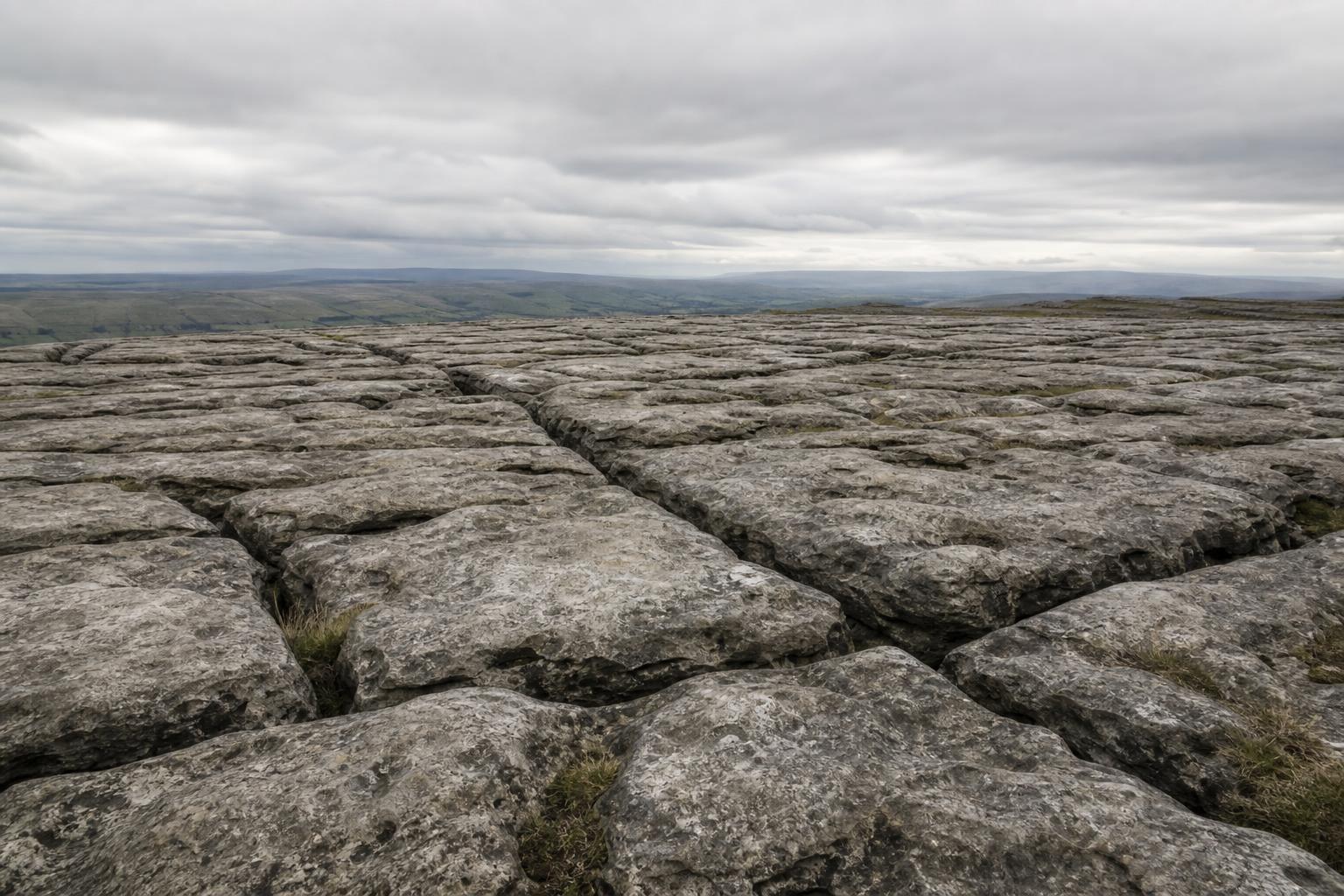
The cove and the pavement
Malham Cove is a curved limestone cliff roughly 80 m (260 ft) high, formed by a combination of a geological fault line and the collapse of what was once a waterfall larger than Niagara, fed by meltwater at the end of the last ice age. Today the cove is normally dry — the beck that once poured over its lip now flows underground through the limestone and re-emerges at the foot of the cliff — though it has been recorded flowing again as a genuine waterfall after exceptionally heavy rainfall in recent years.
At the top, a set of 400-plus stone steps leads onto a genuine limestone pavement: a flat expanse of bedrock split into blocks called clints, separated by deep fissures called grikes. The grikes shelter plants that survive nowhere else nearby, sheltered from grazing sheep and wind — this is a Site of Special Scientific Interest, and walking off the worn paths damages both the plant life and the rock itself.
The Deathly Hallows connection
The limestone pavement atop Malham Cove was used in November 2009 for scenes in Harry Potter and the Deathly Hallows – Part 1, where Harry and Hermione make camp while on the run — one of several Malhamdale locations used across that production, alongside Malham Tarn and Gordale Scar itself.
On to Gordale Scar
A roughly 2-mile round-trip footpath connects Malham village to Gordale Scar, a dramatic collapsed limestone gorge with two waterfalls tumbling through it. The direct scramble up beside the lower waterfall is a genuine hands-on scramble over wet rock, not a maintained path — it's avoidable via a longer, easier route around if you'd rather not climb it, particularly with children or in wet conditions.
Practical notes
Malham village has a National Park Centre with a pay-and-display car park that fills by mid-morning most weekends year-round — this is one of the most-visited single sites in the whole national park. The steps to the pavement are steep and can be genuinely slippery when wet; sturdy footwear matters more here than the modest distance suggests.